Do I Need a Permit to Build a Dock in Tampa Bay?
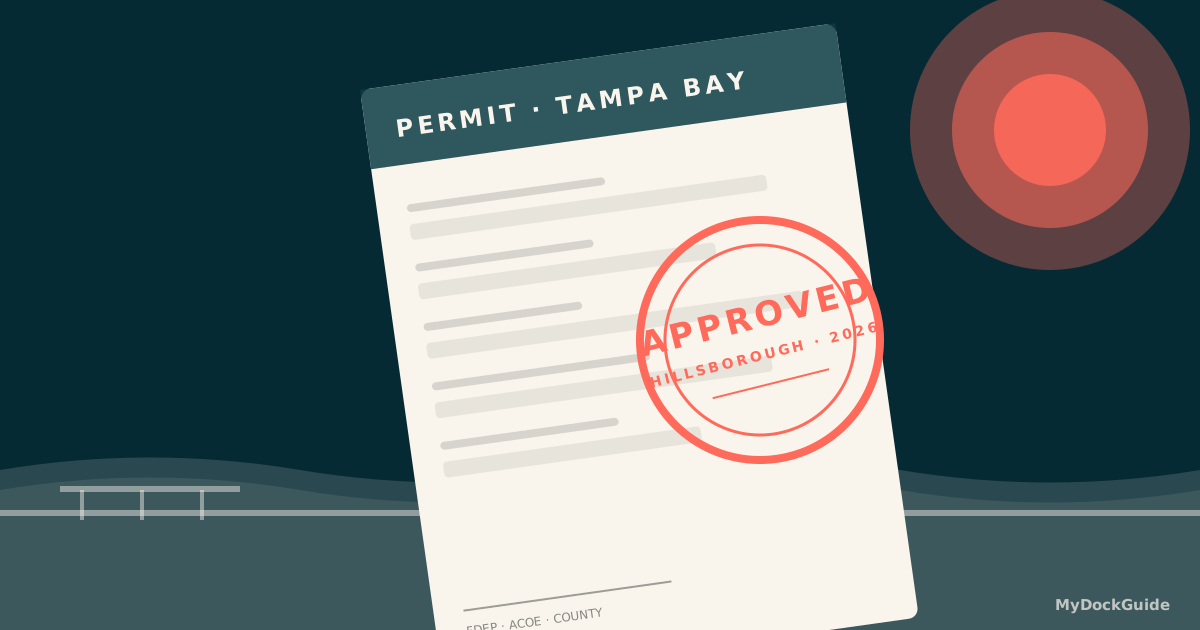
Short answer: yes. And usually more than one.
Every year we watch homeowners in South Tampa, Apollo Beach, and Snell Isle assume their dock is small enough to fly under the radar. It almost never is. Between the county, Florida DEP, the Army Corps of Engineers, and sometimes an HOA that thinks it runs the neighborhood, a Tampa Bay dock is one of the most heavily reviewed pieces of private construction in the state.
The good news is that once you understand who is involved and what each one cares about, permitting stops feeling like a maze. It becomes a checklist. This guide walks you through every agency in the exact order they matter for a Tampa Bay build, plus the four things that quietly kill applications.
The four agencies you will actually deal with
Waterfront construction in Florida is reviewed to protect waterways, marine life, and navigation. That is a good thing. It also means four separate offices will look at your project before you can drop a piling.
1. Your county building department
This is where every dock in Tampa Bay starts. Hillsborough County Building Services, Pinellas County Building & Development Review, Manatee County Building & Development Services, Sarasota Development Services, and Pasco County Building Construction Services all issue the local permit that lets a crew show up on your property with a piling driver.
Fees typically run $1,800 to $3,000 depending on county and project value. Timelines are honest: expect 4 to 12 weeks. Pinellas runs longer than Hillsborough right now because of higher application volume across the beaches.
2. County environmental review (Hillsborough only)
Hillsborough has its own Environmental Protection Commission (EPC) that layers on top of building permits. If your address is in Tampa proper, Riverview, Apollo Beach, or anywhere in unincorporated Hillsborough, EPC gets a look. Pinellas rolls its environmental review into the main county permit.
EPC cares about seagrass, manatee zones, and shoreline modification. They rarely deny outright. They often send back questions that eat 4 to 8 weeks if your first submittal is thin.
3. Florida DEP (FDEP)
The Florida Department of Environmental Protection oversees any construction over sovereign submerged lands. In practice that is every dock, because the state owns everything below the high tide line in tidal waters.
Here is the trick: most single-family docks in Tampa Bay qualify for a general permit or exemption. That is fast, sometimes as short as 30 days. The moment your dock crosses 500 square feet, has a boathouse over it, or lands near seagrass, you get bumped to individual review. Individual review runs 6 to 20 weeks and can require a biological survey.
Not sure which permits apply to your lot?
Grab our free Tampa Permit Checklist. It walks you agency by agency, so nothing gets missed.
4. U.S. Army Corps of Engineers (Jacksonville District)
Federal review. The Army Corps steps in for any construction in navigable waters, which covers essentially every Tampa Bay canal that connects to the Bay proper. The Jacksonville District handles Florida.
Most private docks qualify for a Nationwide Permit, which is fast (4 to 8 weeks) and almost automatic. Boat lifts, larger structures, and anything near a federal channel or spoil island can trigger an Individual Permit. Individual Permits are painful. Realistic budget: 4 to 24 weeks, and sometimes an environmental assessment on top.
What about my HOA?
This is the one that ambushes waterfront owners more than any government agency. Your HOA can be stricter than every county rule combined. They can restrict dock width, length, height, lighting color, materials, distance from property lines, and even the direction the boat parks. And unlike the county, an HOA can shut a build down after construction has started.
Read your covenants before your contractor breaks ground. If the CCRs mention an architectural review committee, submit to them first. We have seen fully permitted docks torn out because the owner did not run the design past a three-person HOA committee that met once a quarter.
How long does the whole process take?
For a typical single-family dock in Tampa Bay with no seagrass and no oversize footprint, budget 10 to 16 weeks from application to shovel in the water. That is longer than the actual construction. Most builds run 2 to 4 weeks once permits are in hand.
Add complications and the number climbs fast. Seagrass mitigation adds 8 to 16 weeks. Individual Corps review adds 3 to 6 months. Rebuilding after a storm can compress timelines through Florida's post-disaster expedited review, but only if you file intent within 90 days of the storm being declared.
The four things that quietly kill applications
- Assuming the quote covers permit fees. Only about half the quotes we review actually include the county, state, and Corps fees. If it is not on the line item list, it is not included.
- Skipping the HOA review. Every dock we have seen torn out post-construction started with a homeowner who thought the HOA would not care.
- Filing without a survey. A recent boundary survey is required by most Tampa Bay counties. Old surveys get rejected. Budget $800 to $2,500 for a fresh one.
- Ignoring seagrass on your parcel. Aerial photos are public. Reviewers will see seagrass beds you did not disclose. Getting caught adds 3 to 6 months and looks bad in future filings.
Want a licensed builder to handle the paperwork?
Most established Tampa marine contractors pull every permit as part of their scope. Get up to 3 free quotes from vetted local builders who manage the whole thing end to end.
Get my free quotes →The bottom line
Almost every Tampa Bay dock needs multiple permits. That is not a reason to panic. It is a reason to plan for a real timeline, budget for real fees, and hire a licensed builder who has pulled a hundred of these before yours.
The homeowners who get burned are almost always the ones who assumed the process would be simple, took the cheapest bid, and skipped the HOA. Do those three things differently and permitting becomes a paperwork slog, not a crisis.
This guide is general information, not legal advice. Permit requirements vary by municipality, and rules change. Always confirm with your local building department and the current FDEP guidance before you commit to a timeline.